DOBEL® Film Laminated Aluminium – Rethinking Train Interior Materials
What if the next generation of train interiors started with rethinking the materials we use?
Marcin Parczewski is Train Interior Specialist and Sales Manager at Metalcolour:
“We are seeing a growing interest in challenging some of the traditional material choices in rail interiors. DOBEL® Film Laminated Aluminium offers an interesting combination of freedom in design, formability, low weight and fire safety – and we believe its potential goes far beyond traditional materials.”
For decades, materials such as plywood and HPL have been familiar choices for hard interior surfaces in railway vehicles. But as designers, train manufacturers and interior suppliers, look for new ways to combine functionality, efficiency and distinctive design, there is a case for looking at these established choices from a different perspective.
From traditional materials to a new material approach
One of the challenges in developing modern train interiors is finding the right balance between design, functionality, safety and efficient manufacturing. Traditional hard laminates can impose limitations when components need to be shaped, formed or integrated into more complex geometries.
Dobel Film Laminated Aluminium takes a different approach. By combining an aluminium substrate with a durable decorative film, it brings together the properties of metal with a wide range of visual possibilities. The result is a lightweight material that can be rolled, pressed, profiled and formed, while retaining the appearance and properties of the decorative surface. This creates opportunities for components and geometries that can be more challenging to achieve with conventional materials.
“There is a real opportunity to rethink how hard surfaces are designed and manufactured in train interiors. We have ongoing cases showing astonishing benefits from using Dobel Film Laminated Aluminium,” says Marcin.
Safety First
For rail interiors, however, freedom in design is only part of the equation. Fire safety is fundamental. Dobel F105 is approved to EN 45545-2 at the highest hazard level, HL3, making it suitable for applications where the most demanding fire safety requirements apply. This gives designers and manufacturers the opportunity to explore the benefits of film laminated aluminium without compromising one of the most important requirements of a modern railway interior.
The material is also designed to withstand the demanding conditions of everyday passenger use, including exposure to cleaning agents and the wear associated with high-traffic environments.
Freedom in design on an industrial scale
If a material limits the designer, it will always involve a compromise. That is where Dobel offers another advantage. The range of colours, textures, patterns and finishes is extensive, with more than 400 designs available from stock and more than 1,000 additional options available on request. This means that material selection does not have to come after the design concept. Instead, the material itself can become part of the creative process – helping to shape surfaces, forms and visual identities from the outset.
“This is one of the most exciting things about Dobel is that you don’t have to choose between form and function. You can create the look you want while working with a material that can be formed into the shapes the design requires,” Marcin explains.
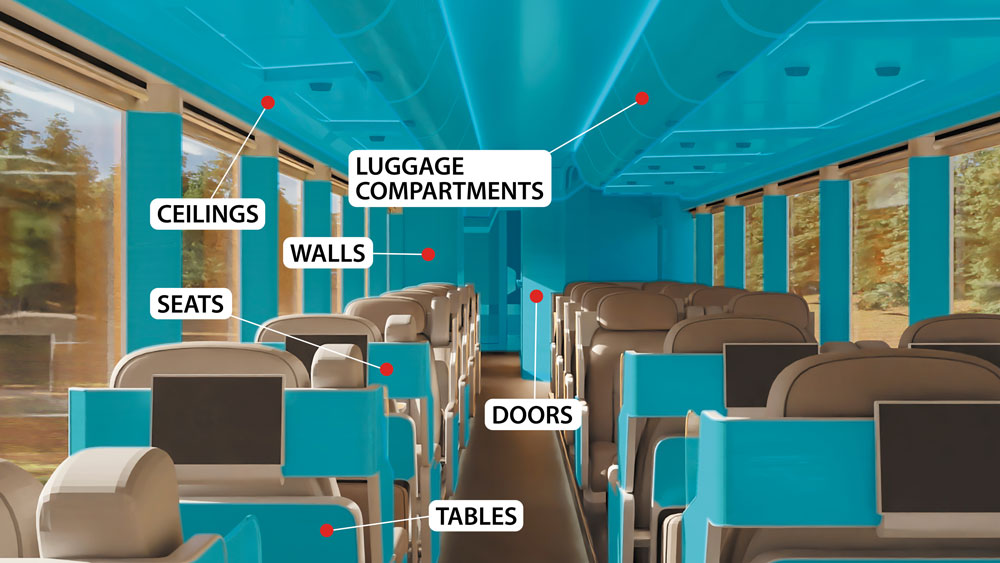
The possibilities extend across a wide range of interior applications. Dobel Film Laminated Aluminium can be considered for seat components, wall and ceiling panels, doors, luggage compartments, tables, wet areas and other hard interior surfaces.
Setting new standards
Metalcolour is not new to this kind of transformation. Around 50 years ago, the company was involved in introducing film laminated metal to the marine industry, helping establish a new approach to cruise ship interiors at a time when manufacturers were struggling with demanding requirements for both design and fire safety. Today, Dobel products are widely regarded as an industry standard within the marine sector.
That experience is now being brought into the rail sector. The recent collaboration between Metalcolour and Czech train-seat manufacturer Borcad provides an early example. In that project, Dobel was selected for seat backs, side panels and headrest components, replacing surfaces that would have been manufactured using traditional materials. But seating is only one possibility.
“Our experience from the marine sector has shown us that changing the material can do more than improve a single component. It can open the door to new ways of designing and manufacturing interiors. We believe it is time to bring that thinking into the rail industry,” says Marcin.
A new way of thinking
The opportunity is therefore about more than replacing one material with another. It is about reconsidering what is possible when design, formability, fire safety and industrial production are considered together from the beginning. For train manufacturers, interior suppliers, and designers, Dobel offers another tool for developing the next generation of passenger environments – from individual components to complete interior concepts.
The question is no longer simply which traditional material should be used. From Metalcolours point of view it is: what could we design if the material itself gave us fewer limitations?
Please contact our Team Members: